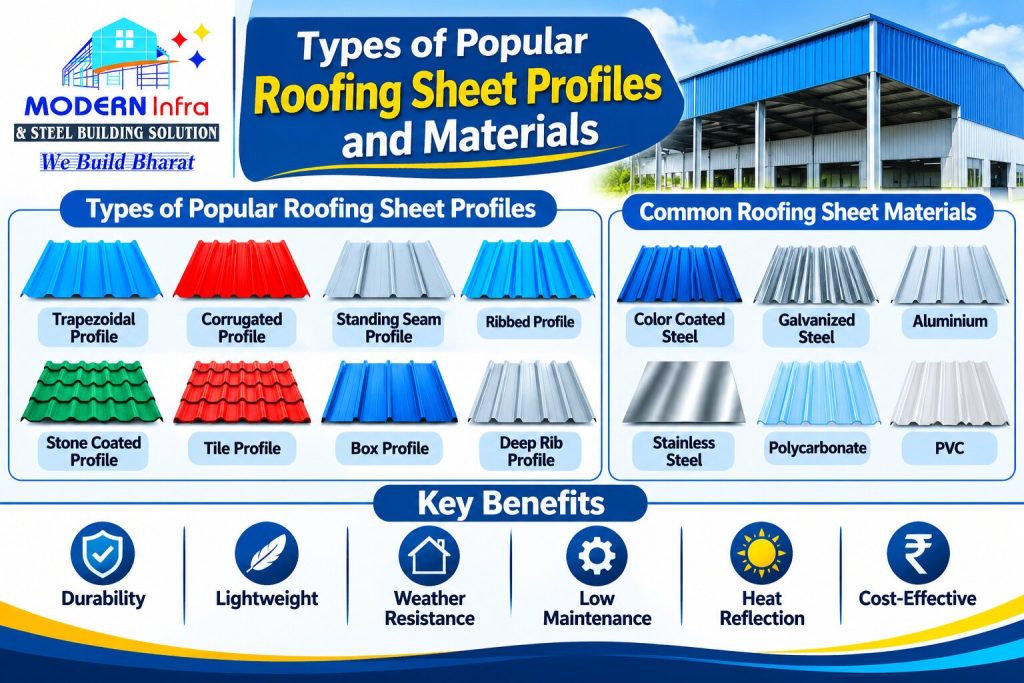
If you really get into roofing sheets, you would be amazed by the varieties offered by modern construction techniques. There are different designs, geometries and material compositions from roofing sheet manufacturers. All of them have a certain engineering and aesthetic sense to each. The fundamental purpose is to protect the interiors from heat, extreme weather, rain, water leakage, and to support the structure. With some commonalities and variations, there are many combinations of designs that the engineers choose for creating the right sheet for a particular structure.
Why Roofing Sheets Are Different from Concrete Roofs
Before we go into the types of roofing sheets, we should first understand how they differ from concrete roofs. The roofing sheets are lighter in weight, faster to install, sloped or curved, and have a low upfront cost. These are cost-saving alternatives to concrete roofs. Today’s roofing sheet manufacturers resolve the issue of the sheets’ low thermal and acoustic barrier by introducing an insulating medium.
Roofing Sheet Materials
Galvalume
Galvalume roofing sheets are composed of steel that is coated with an aluminium-zinc alloy. The coating is made up of approximately 55% aluminium, 43.4% zinc and 1.6% silicon by weight. Aluminium protects the roofing sheet from atmospheric elements, while zinc protects the underlying steel as a sacrificial anode. This is why Galvalume is used for industrial and commercial roofing.
Galvanized Iron
Galvanized iron roofing sheets are made with sheets of steel that are coated with a coating of zinc that protects the base metal from corrosion. This layer works as a barrier, and when the steel surface is slightly damaged, the zinc layer functions as a sacrificial layer. GI sheets are popular because they are easily available, economical, and flexible.
Color-Coated
Colour-coated roofing sheets are manufactured using steel with a metallic coating. The coating is generally made using galvanized steel or Galvalume, followed by a layer of protective paint system. Generally, the coating system includes the primer layer at the bottom, followed by the topmost layer.
Sandwich Panels
Insulated roof panels or sandwich panels are roofing systems made of two layers of metal combined with insulating core material placed between them. Examples of core materials used include polyurethane (PU), polyisocyanurate (PIR), and mineral wool. The choice of insulation depends on its thermal properties as well as fire and acoustic requirements and applications in construction.
Roofing Sheet Profiles
Trapezoidal
Trapezoidal sheets have ridges on the surface called ribs that have a trapezoidal cross-section. Ribs increase the stiffness and load-carrying capacity of the sheet compared to a flat sheet of the same thickness. In addition, their shape helps rainwater drainage.
Standing Seam
Standing seam sheets consist of a series of vertical seams connecting adjacent panels of standing seams. Vertical seams are made in such a way as to either conceal or protect the main connection points of the panels according to the system.
Corrugated
Corrugated sheets feature a combination of ridges and valleys on their surfaces. This design enhances the strength of the sheet. Corrugated sheets have been developed in the construction field for many years.
Skylight Panels
Skylight panels are created to provide the interior of a structure with natural light from above. These are usually made of semi-transparent materials, like fibreglass or polycarbonate. They can be put in proximity to metal roofing sheets to create natural light openings.
Conclusion
Roofing sheets are a common choice nowadays because they can be made from a variety of materials and can come in various shapes and profiles, allowing different designs to meet specific functional and architectural requirements. The key feature of a successful roof is the right combination of the quality of the materials used to make the roof, its shape, installation, and ability to protect. Builders, architects, and engineers can rely on roofing sheet manufacturers like Modern Infra & Building Solution to choose the right profile and specifications for their project.
