
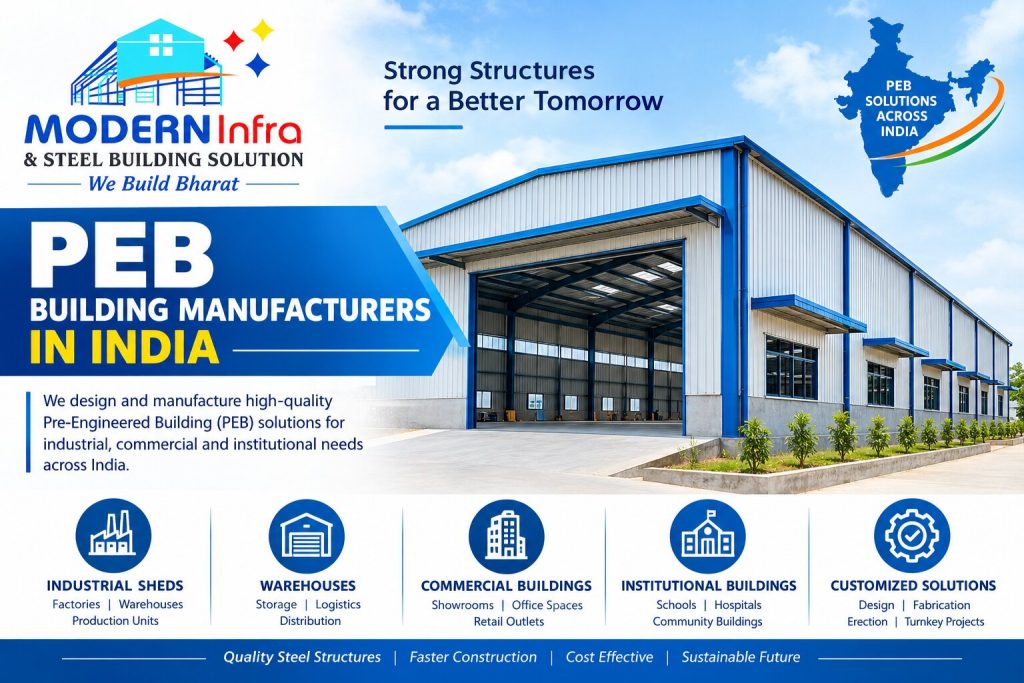
In industrial and commercial projects, construction waste has become a major issue. The leftover steel, damaged materials, excess packaging, and rejected parts can result in increased project expenditure and disposal problems since construction waste is very hard to get rid of. Pre-engineered buildings can help reduce this construction waste through precise planning, prefabrication in factories, and proper handling of materials. By applying these methods, PEB building manufacturers in India minimize waste and make construction more environmentally friendly.
Precise Design and Material Planning
Preparation of Detailed Project Designs
The process of reducing waste actually starts ahead of any construction operations. Manufacturers come up with project designs, which include project dimensions, the requirements set for the construction process and its specifications. With accurate calculations that help to establish how much steel will be needed, it is possible to minimize new purchase requirements and avoid many changes during the construction process.
Optimizing Steel Usage
Steel is the main material used in the construction of pre-engineered buildings (PEB). By optimizing the cutting patterns and size of structural members, manufacturers can save steel. Proper nesting and cutting plans help avoid the formation of leftover segments, while accurate measurements do not require excessive cutting.
Factory-Based Fabrication
Reducing On-Site Cutting and Adjustments
The components of a PEB are produced in factories before they are sent for installation. The structures are made according to the approved projects. This helps avoid excessive cutting, drilling, and reworking on site and the waste of material that may result from incorrect measurements.
Increased Quality Control
Quality checks at the production site allow identifying inaccuracies in measurements and defects in production before the products are delivered to the site. Thus, possible errors are eliminated beforehand and there is a reduced risk of rejecting the materials or changing the poorly produced structures.
Transportation and Storing Effectively
Preventing Material Damage
During transportation, loading and unloading, steel components and roofing sheets may sustain some damage. Proper packing and securing methods, as well as appropriate lifting equipment, help reduce such occurrences. In addition, the delivery process is coordinated with the schedule of construction works. This minimizes unwanted handling and hence reduces the time of exposure to site conditions for materials.
Site Storage Organization
Materials must be kept on reliable supports and protected from moisture, dirt, and accidental damage if necessary. Ensuring that elements are arranged following the order of installation also prevents the loss or damage of components.
Using and Recycling Spare Materials
There may be steel scraps left after the manufacturing process. According to the manufacturers, these scraps may be used in the making of further products. The use of such spare materials leads to better efficiency.
Scrap steel that cannot be reused for its intended purpose can be sorted and sent to recycling plants. Other packing materials and recyclable waste can be handled separately as well.
Coordinating Installation Activities
Having clear installation drawings, a proper recognition of components, and a systematic assembly plan is helpful in avoiding errors on site. Correct coordination between the teams responsible for fabrication, transport and assembly minimizes reworking.
Conclusion
In order to achieve a significant reduction in construction waste, one needs to make clever decisions at every stage of a project, i.e., designing, fabricating, transporting and installing. Efficient planning, proper production, and recycling techniques allow PEB building manufacturers in India to contribute to the economy of resources in industrial construction. Modern Infra & Building Solution recommends project owners discuss waste management issues with manufacturers at the early stages of planning.
